Categories
Uncategorized

Jawad’s Classical Archives – Set 01, CD 018

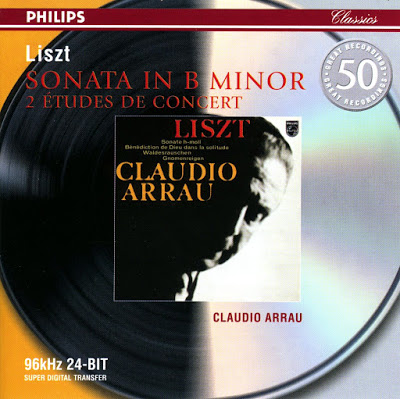
Arrau plays Liszt’s Piano Sonata, etc. (Philips Classics)

Artist(s): Arrau, Claudio

Composer(s): Liszt, Franz

Series: Philips Classics

My Opinion

Widely regarded as the greatest Chilean pianist of all times, Claudio Arrau was trained with the rigor of the Germanic classical tradition of the early 20th century. His repertoire, while being among the largest of all great pianists, has at the core of its foundations the works of Bach, Beethoven, Brahms, Schumann, Schubert, Chopin, and last but not least Liszt.

Arrau’s affinity with Franz Liszt is easy to comprehend, given that he was trained by a pupil of the great Hungarian composer. The rendition in this disk of one of Liszt’s major works, the monumental piano sonata in B minor, brilliantly showcases this filial relationship. There are ample indications that, as Sir Colin Davis said, Arrau’s “devotion to Liszt is extraordinary. He ennobles that music in a way no one else in the world can.” Here the extraordinary technical command is totally at the service of the artistic expression; and the intellectual, reflective quality of the interpretation is quite simply peerless. The other pieces that accompany the sonata are of the same stellar quality.

This is a recording of Liszt’s great piano sonata that certainly ranks among the top five (or perhaps three) modern recordings available, along with Horowitz, Richter, Brendel, and Argerich celebrated recordings. The Philips remastering is excellent and adds to the appeal of this set.

Reviews

“Claudio Arrau’s 1970 Philips recording of Liszt’s B minor Sonata, not to be confused with his hard-to-find 1985 digital remake, remains unmatched in its fusion of technical finish, personal poetry, and spiritual depth. Under Arrau’s immaculate, amazingly even and supple fingers, the piano’s percussive components are transformed into fluid, organ-like sonorities that resonate from the bottom up. You may cavil with a rubato here or an italicized phrase there, yet there’s nothing remotely self-regarding about this pianist’s trembling theatricality. His bardic style both clarifies and reads between Liszt’s lines without stepping upon or second-guessing them. Once you submit to Arrau’s demanding journey, you’ll be rewarded and nourished for years to come.

The Bénediction de Dieu either can be powerfully sublime or static and trite, depending on the pianist. Arrau’s serious, full-bodied approach pays profound dividends as he sings out the left-hand melody in long arcs against the right hand’s caressing double notes. Likewise, his slower-than-usual Gnomenreignen comes off more like a tone poem than an étude, and Waldesrauschen’s murmuring filigree has gorgeous color and quiet strength (notice the longing with which Arrau inflects its rising chromatic melody).

To fill out the recital, Philips includes Vallée d’Obermann, arguably the high point of Arrau’s great 1969 Philips Liszt recital (when will this be reissued singly?). It’s instructive to hear how Arrau projects the music’s brooding angst and harmonic tension through means of color, touch, and timing, in contrast to the pronounced tempo fluctuations and textural rewrites Vladimir Horowitz imposed on the score. While both approaches are convincing, Arrau’s faith in Liszt’s urtext results in a final peroration that organically flows from what came before, rather than sounding like a tacked-on octave étude. Philips’ 24-bit transfers reveal more tape hiss than previous CD editions and show a brighter if slightly harsher top end. No Liszt lover should be without these transcendent performances. And even if you don’t love Liszt, Arrau’s singular artistry will win you over.” – Jed Distler, review for ClassicsToday.

Categories
Uncategorized

Jawad’s Classical Archives – Set 01, CD 017

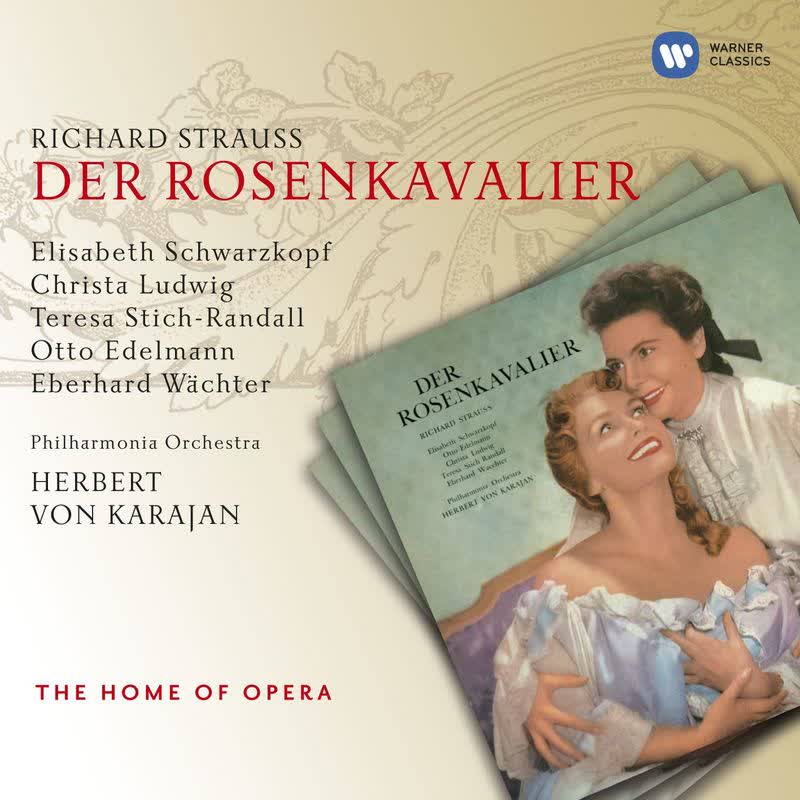
Karajan conducts Richard Strauss’ Der Rosenkavalier (EMI’s Great Recordings of the Century)

Artist(s): Karajan, Herbert von
Schwarzkopf, Elisabeth
Ludwig, Christa
Stich-Randall, Teresa
Edelmann, Otto

Composer(s): Strauss, Richard

Series: EMI’s Great Recordings of the Century

My Opinion

Is getting a reincarnation of Elisabeth Schwarzkopf in the realm of the possible? As with the likes of Maria Callas, Victoria de Los Angeles, or Christa Ludwig, I think not. For the great Austro-British soprano’s near-perfect endorsement of the operatic Viennese tradition has never been equaled. And this is particularly striking in the works of Mozart and Richard Strauss. This recording from the mid 1950s is a stunning case in point.

Legendary conductor Herbert von Karajan (1908 – 1989) does not need an introduction, of course. In the eye of the general public, he is the very incarnation of the virtuoso conductor. He could have his occasional quirks, especially in the last three decades of his admirable career. But in the 1950s, when this landmark recording of Strauss’ masterpiece was committed to disk, he was a genial conductor on all possible accounts. In this recording he directs a dream cast to accompany Dame Schwarzkopf, led by two magnificent duos of singers, Ludwig/Stich-Randall and Edelmann/Wächter. The Philharmonia Orchestra and Chorus are at the peak of their powers.

The only competition to this marvelous recordings is the earlier classic set by German conductor Erich Kleiber. Both sets have their unique strengths and complement each other in many ways. As such they have their due place in your library.

Reviews

“Some while back I reviewed the classic 1954 Erich Kleiber Rosenkavalier, reissued on Decca’s “Legendary Performances” series (467 111-2). Now the 1956 Karajan is available as one of EMI’s Great Recordings of the Century.

The Kleiber was the first complete recording of the work. It also enshrines a deeply authentic approach, nurtured in Vienna under the likes of Clemens Krauss and Kleiber himself and a trio of ladies – Reining, Gueden and Jurinac – who had grown up with their parts in a Vienna where the composer himself was very much a living memory (and Gueden had taken up the part of Sophie at his request). As a recording it was a first, but as a performance it marked the end of a long line in which the work was presented with total understanding and sympathy rather than interpretation as such. The Karajan came only two years later, but by this time Strauss was, as it were, a public monument. The EMI set ushered in a new era of “personalised interpretations”.

What this means in practice can be heard in the Marschallin’s soliloquy on the passing of time. Schwarzkopf’s semi-whispered phrases amount to a deeply imaginative approach on the part of both her and the conductor, and with the distant clock striking the music comes to a complete standstill. Schwarzkopf’s final phrase is preceded by a pause and is then as long-drawn-out is it could possibly be. Reining and Kleiber, by contrast, give us Strauss “neat”. Abetted by a brighter, more forward recording they could seem rough-mannered as they keep things on the move (no indulgence as the clocks strike), except that they give us one essential ingredient that Strauss, in love with the soprano voice right through his career, must surely have longed for; the almost sensual satisfaction of a full-toned voice billowing and soaring across the footlights. That is what people go to the opera for, and Schwarzkopf and Karajan seem intent on withholding this. Invariably, when she enters or returns to the scene, she does so not like a prima donna whose task is to hold the stage, but emerges imperceptibly from the orchestra. As so often, Karajan’s sheer refinement seems to cushion the listener from the full impact of the music. Similarly, as love dawns between Octavian and Sophie, Teresa Stich-Randall’s high pianissimo Bs and Cs have a pure, disembodied quality which exhibits a control unmatched by Hilde Gueden, who nevertheless has the essential oomph-factor. Best of all, maybe, was Schwarzkopf herself back in 1947 as a free-soaring Sophie in a short extract recorded with a more unconstrained Karajan.

Considering all the moments of stasis, it is remarkable that Karajan’s overall timings are faster in all three acts. In certain moments, such as the pantomime at the beginning of Act 3, he really goes like the wind, and with Kleiber you feel the singers have that spot more time to express their words in the comic exchanges. Still, this was only the first of the personalised Rosenkavaliers, and Karajan was always a great master of the overall line, something which later purveyors of faster-than-fast alternating slower-than-slow rather lost sight of. All this would nevertheless seem to point to a recommendation for Kleiber, even taking into account Edelmann’s less boorish Ochs, real luxury casting of the smaller roles (Gedda is wonderful as the Italian tenor, where Anton Dermota struggles a bit) and a more refined if a little recessed recording.

Except that, come the Act 3 trio, the overwhelming climax of the work, and Karajan finally loses himself in the music, and when this happens all his refinements fall into place. At last the voices are encouraged to soar out freely (had he been saving up for this all along?) and even Kleiber’s glorious account is quite surpassed. This at least is one of the “Great Recordings of the Century”. I don’t know if this in itself adds up to a recommendation ahead of Kleiber, but it does rather sound as if you’ll need both of them.” – Christopher Howell, review for musicweb-international.com.

Categories
Uncategorized

Jawad’s Classical Archives – Set 01, CD 016

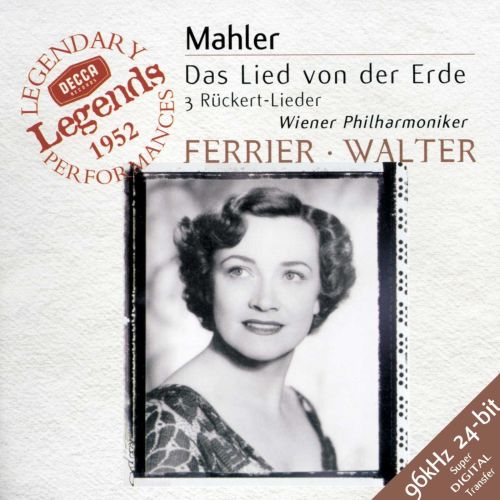
Ferrier sings Mahler’s Das Lied von der Erde, etc. (Decca Legends)

Artist(s): Ferrier, Kathleen
Patzak, Julius
Walter, Bruno

Composer(s): Mahler, Gustav

Series: Decca Legends

My Opinion

I have a mixed feeling about this particular recording. On one hand, it features the most beautiful singing one might dream of hearing. On the other, it is infused with an unbearable sense of tragedy surrounding its main protagonists: Gustav Mahler, the composer, and Kathleen Ferrier, the female singer.

Das Lied von der Erde is one of Gustav Mahler’s greatest compositions, and this rendition by Dame Kathleen Ferrier (1912-1953) with a Wiener Philharmoniker conducted by the great Bruno Walter is undoubtly among the most satisfying. Sadly enough, the work was recorded shortly after the great British contralto was diagnosed with breast cancer that will lead to her untimely death. The sheer beauty of singing only adds to the poignancy and the pathos of being deprived of such a talent at such a young age. I had the exact same feeling the first time I heard Romanian pianist Dinu Lipatti’s landmark interpretation of Chopin Waltzes: deep, almost unfathomable sadness.

The direction by Bruno Walter – a pupil of Mahler – benefits greatly from his intimate understanding of this sublime music, and the Wiener Philharmoniker is – that goes without saying – a first-class orchestra. All in all, this is an unmissable recording.

Reviews

“Rather than try to find something new to say about this famous recording, I just want to make a few reflections. Is it possible to ignore, while listening, a whole series of outside factors? Mahler obsessed with death and clinging to the life he loved, Mahler’s pupil Bruno Walter enjoying a rare opportunity to conduct a major work by the master whose work he passionately propagated whenever he could (do younger listeners even realise how seldom this work was played in those days?), on an almost equally rare post-war return to his beloved Vienna Philharmonic, and with his protégé Kathleen Ferrier, who he had patiently guided to became a great lieder singer, in the full flower of her stupendous voice? And above all, Ferrier herself, just turned 40 yet singing the Abschied in full awareness that her own days were numbered (she died the following year)? And if we could put all this on one side, would it be right to do so? For all these factors converge to make this not just a record, not just a performance, nor even just a document, but a magic moment in time, mercifully preserved for us. So get it if you don’t have it already, but don’t spoil it by listening to it too often, choose a good modern version for everyday use and take this out from time to time to remind yourself that these moments really happen. Oh, and I nearly forget to say that Patzak is excellent and the recording, if a little shallow, is incredibly good for its age.” – Christopher Howell, review in musicweb-international.com.

Categories
Uncategorized

Jawad’s Classical Archives – Set 01, CD 015

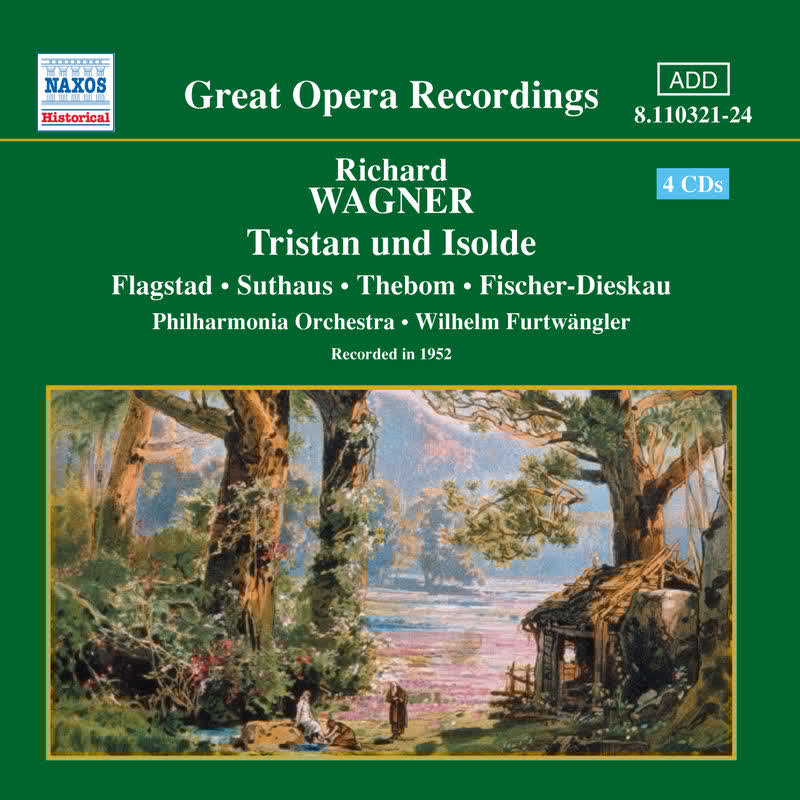
Furtwängler conducts Wagner’s Tristan und Isolde (Naxos Historical)

Artist(s): Furtwängler, Wilhelm
Flagstad, Kirsten
Suthaus, Ludwig
Fischer-Dieskau, Dietrich
Thebom, Blanche

Composer(s): Wagner, Richard

Series: Naxos Historical

My Opinion

A friend of mine has reminded me that it is awkward to post more than ten reviews of great recordings, and still miss out somehow on both Richard Wagner and Wilhelm Furtwängler. This is a legitimate grievance I tend to agree with. Allow me, then, to put the matter to rest in style, with one of the most memorable classical recordings of the 20th century.

There is no serious classical music connoisseur that would not rank the great German conductor Wilhelm Furtwängler (1886 – 1954) within a shortlist of the top five conductors of the 20th century. For me, he tops that shortlist, quite simply. I had an embarassment of choices to pick one of his great recordings: one or two of his Beethoven Ninths could have served the purpose, for instance. I have finally settled on this legendary Tristan recorded two years before the master’s death. What made me decide this way are a few elements: an incomparable trio of singers made of Kirsten Flagstad, Ludwig Suthaus, and Dietrich Fischer-Dieskau – putting an ensemble that gets even close to this quality nowadays would be inconceivable, wouldn’t it? the brillance of the Philharmonia Orchestra in its golden age, the 1950s; and last but not least, the genius of Furtwängler’s conducting, bringing a lifetime of experience and artistic pedigree of the highest order to the service of the masterpiece that is Tristan und Isolde.

No four hours of your life could be worthier than the ones you would hopefully spend listening to this recording. Besides, the great sound remastering effort by restoration engineer Mark Obert-Thorn is the cherry on the top of the cake.

Reviews

“Given his eminent position in the world of conducting it is surprising that this 1952 performance was Furtwängler’s first studio recording of a complete opera. Despite his conducting Mozart’s Figaro and Magic Flute at Salzburg in 1950, Walter Legge chose Von Karajan for the studio recordings made that year. Legge also made disparaging remarks about Furtwängler that got back to the conductor’s ears. He consequently refused to allow Legge to be producer of this recording, which was to be the first in London using magnetic tape throughout. Despite having sung her last stage Isolde the previous year, Kirsten Flagstad at 57 was still pre-eminent in the role a position she had occupied since making her debut in the role in 1936. She had been signed up for the recording and insisted on Legge being the producer. The impasse was only resolved by much diplomatic manoeuvring and a convoluted apology from Legge who never produced another of Furtwängler’s recordings.

Norwegian-born Kirsten Flagstad was not merely the pre-eminent Isolde of her day but had been considered the world’s foremost Wagnerian soprano since her debut in a major part at Bayreuth in 1934. Her performance there the previous year in the minor parts of Ortlinde and Third Norn had been her first outside Scandinavia. Happily married to a rich second husband she was seriously considering retirement when the call came to appear at the Wagnerian shrine. Her success at Bayreuth led to a contract at New York’s Metropolitan Opera where she went on to sing Sieglinde followed by Isolde, Brünnhilde, Elisabeth, Elsa and Kundry, all to great acclaim. Flagstad became the rage of New York singing to packed houses and helping the Met back on its financial feet after the disastrous years that followed the Wall Street Crash and great depression. Despite mutual personal antipathy Flagstad appeared regularly at the Met with Lauritz Melchior considered by many to be the greatest ever Wagnerian tenor. A re-recording of Tristan with this duo was made of performances at Covent Garden on May 10th and June 2nd 1936. Its 209 minutes is an abridged version. In poorish sound it can be heard on Naxos 8.110068-70. The two sang together in the March 13th 1940 performance at the Met conducted by Leinsdorf a version of which has appeared on Guild’s Immortal Performances Series. Sub-titled ‘Opera House of our Dreams’, the recording substituted Alexander Kipnis as King Marke from a later broadcast performance. For those not squeamish about such conflations this issue presents Flagstad at the peak of her considerable powers and matched in every respect by the Tristan of Melchior and the Brangäne of Kerstin Thorborg. At 219 minutes it too is a cut performance version. Its sound is not of the quality of this studio recording. Nor does the more superficial conducting of Leinsdorf compare with the passion and intensity Furtwängler draws from the Philharmonia. Allowances for age being made, the sound of the orchestra is well caught and brought out by the restoration engineer Mark Obert-Thorn.

Of the singers only the Brangäne of Blanche Thebom is below par. As the informative booklet essay by Malcolm Walker recounts she was third choice for the recording and at times it shows. Dietrich Fischer-Dieskau is a fine full-toned Kurwenal who shares Tristan’s wounded agony and illusions (CD 4 trs. 1-4). As Tristan Ludwig Suthaus hasn’t the sheer power of Melchior but he is never less than appealing of tone and characterises well throughout. He is appropriately ardent in the love duet (CD 2 trs. 4-7). Of course the success of any performance of this opera depends on the Isolde and there has never been a better interpreter than Flagstad. A not inconsiderable actress her rather matronly appearance had caused comment at her final stage appearances in the role at Covent Garden in 1951. If her singing can be faulted in any way at all it is that she does not convey the sexiness that we might expect in the love duet. This is a small price to pay for the gleaming secure tone, even legato and nobility of phrasing that pervades the rest of her performance. It is a performance to stand alongside any studio opera performance. It is typical of her realism that at 57 she had doubts about her top c in the love duet. Famously Elisabeth Schwarzkopf sang these for her. Those who continue to question Richard Caniell’s conflations on Guild should take note.

EMI re-issued this performance as a GROC, considerably cleaning up the sound. That issue remains in the catalogue and comes complete with libretto and translation at more than twice the cost of this Naxos issue which has an interesting essay, artist profiles and a good track-related synopsis. My only grumble is that 23 tracks for 255 minutes of opera is rather sparse. Otherwise this justifiably famous recording should be investigated by all opera lovers who do not already own a copy.” – Robert J. Farr – Review in musicweb-international.com.

Categories
Uncategorized

Jawad’s Classical Archives – Set 01, CD 014

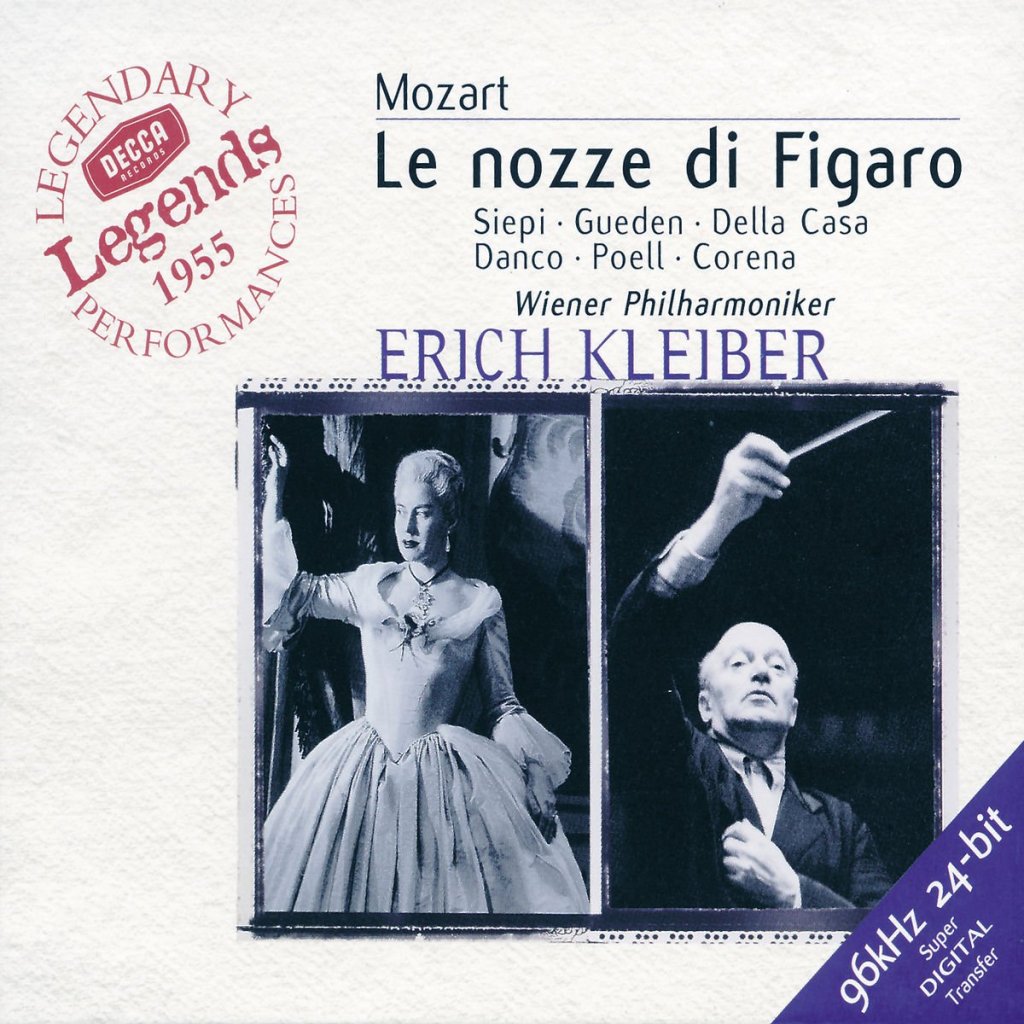
Kleiber conducts Mozart’s Le Nozze di Figaro (Decca Legends)

Artist(s): Kleiber, Erich
Siepi, Cesare
Della Casa, Lisa
Gueden, Hilda
Poell, Alfred

Composer(s): Mozart, Wolfgang Amadeus

Series: Decca Legends

My Opinion

This is probably the best recording of the best opera by the best composer.

Austrian conductor Erich Kleiber (1890 – 1956) was predestined by background and training to be driving force behind this outstanding recording. He was universally held in high esteem for his Mozart, Beethoven, and Strauss, yet none of his great recordings reach the heights achieved by this one. Here everything is perfectly gauged: the tempos, the transistion, the balance of proportions. In that, Kleiber is helped by the familiar brilliance of the Wiener Philharmoniker, and an illustrious cast featuring the great Cesare Siepi and Lisa della Casa.

There are other great Figaros, of course. I personally own and cherish Giulini’s elegant 1961 recording with Taddei and Schwartzkopf, and the great if not perfect Karajan’s from the 1950s with Kunz and that same Schwartzkopf. These landmark recordings just fell short, however, of matching Kleiber’s greatness.

Reviews

“This justly famous 1955 recording has not lost its power to impress. Erich Kleiber’s leadership is golden–witty and warm, with plenty of breathing space for the singers, a knowing hand in the ensembles, and an always-true sense of proportion. The boxy, early stereo sound has been improved, but remains nothing to rave about. Alfred Poell is an authoritative, nothing-to-laugh-at Count, who sings with lots of color and energy, while Cesare Siepi is a positively brilliant foil to him as Figaro, turning out acres of velvety sound, with an ironic edge and a sure hand. Hilde Gueden may be the best Susanna on discs–all-knowing and pert without ever lapsing into either coyness or archness; she’s so good that Kleiber gives her Marcellina’s last act aria as well! Lisa Della Casa is too cool for my taste as the Countess–not enough of either mirth or sadness, depending on the situation–but always sings well. Suzanne Danco’s Cherubino is not really special, while the Marcellina, Bartolo, and Basilio are about as good as you will find. The Vienna orchestra and chorus, as we might guess, are terrific, all of which adds up to a fine choice, even if this is your only Figaro.” – Robert Levine – Review in Classics Today.

“Erich Kleiber’s 1955 Vienna Figaro marked the first complete recording of what is arguably Mozart’s greatest opera. What a performance! Cesare Siepi and Alfred Poell bring Figaro and the Count, respectively, to life, and play off each other, as do the female principals. Hilde Gueden’s sweet and straightforward Susanna stands out, along with Fernando Corena’s deliciously idiomatic Bartolo (his is still the best Act I Vengeance aria on disc). Kleiber’s well-drilled Viennese musicians are an integral part of the ensemble. The legendary conductor’s sense of proportion, transition, and rightness of tempo still rings true after all these years. Though the sound may not match contemporary Figaro  traversals on CD, musicmaking on this level will never grow old. In sum, a landmark in the annals of Mozart recordings and interpretation.” – Jed Stiller – Review in Amazon.com.

Categories
Uncategorized

Jawad’s Classical Archives – Set 01, CD 013

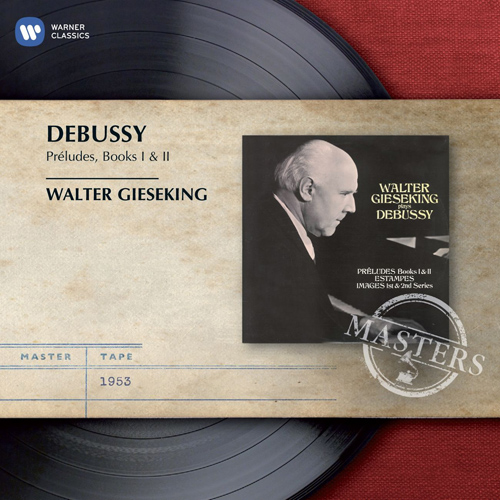
Gieseking plays Debussy’s Preludes, Books I and II

Artist(s): Gieseking, Walter

Composer(s): Debussy, Claude

Series: EMI Great Recordings of the Century

My Opinion

This legendary recording features German master pianist Walter Gieseking, one of the giants of the keyboard in the 20th century, in the popular set of preludes by French composer Claude Debussy.

Gieseking (1895 – 1956) was blessed with unique gifts. It is notorious that he had perfect pitch, and his sightseeing memory was phenomenal – he used to commit entire piano concertos to memory in a couple of days, without even having access to the instrument. No wonder then that he had an immense repertoire, ranging from Bach to the works of the modern composers of the 20th century. It is somewhat striking that this most German of pianists, developed a special affinity and an universally recognized expertise around the French impressionist masters that are Debussy and Ravel. But this is, after all, not that surprising, as their work relies on good control of the tone color and shading, and Gieseking was unmatched in his mastery of the latter.

This is one of the greatest Debussy recordings of all times. Beautiful, intellectually-challenging music interpreted by an old master (he was 57 then) at the height of his powers. In the Debussy Preludes discography, it is the perfect complement to the celebrated recordings by Italian pianist Arturo Benedetti Michelangeli, which I reviewed earlier in this blog. The two sets are great recordings, and there is no point in choosing one of them on top of the other. The pantheon belongs to both, so just cherish the two!

Reviews

“More than 30 years have passed since Gieseking’s death. For a while thereafter his recordings remained as a monument to his art, but these have long been out of circulation. For pianists and listeners of the new generation his is a reputation passed down mainly by admiring older voices and in suspiciously hagiographical literature.
This record should change all that, for it reveals keyboard artistry undimmed by the intervening years. All those critical expostulations over the ravishing quality of sound, the control and shading of pianissimos, the subtlety of pedalling, the ability to individualize and yet blend the strands of a texture, are vindicated. The instrument really does appear to dissolve into something illusory and magical, just as Debussy intended—take ”Le vent dans la plaine”, as one of a dozen possible examples. And if that seems surprising from a 15-stone, six-foot-three German pianist, perhaps even more so are the delightful humour of ”Le danse de Puck” and ”Hommage a S. Pickwick Esq., PPMPC” and the sheer naughtiness of ”Minstrels”.
Two aspects of Gieseking’s art have not stood the test of time quite so well. Reports of his technical perfection sit uneasily alongside his scrambling through the virtuosic preludes, such as ”Les collines d’Anacapri” and ”Ce qu’a vu le vent d’ouest” which suggests that he actually needed to practise rather more than he thought he did (though ”Feux d’artifice” shows the technique in impressive shape). And Gieseking’s much-vaunted fidelity to the text is surely a bit of a fiction. He can be as cavalier over dynamics as the next man—”Ce qu’a vu” works up a good stormy forte long before Debussy cancels the initial piano, for example—and in any case he was clearly working from editions which we now know to be serious misrepresentations.
Far more important though, is the precision of artistic image imparted to each piece—even when Gieseking casts caution and dozens of notes to the winds, this imaginative strength carries him through. And it is worth pondering on the fact that despite the impression of spaciousness this must be one of the fastest Debussy Preludes on record. Background hiss is roughly what one would expect, but if there are any other signs of age in the recording quality Gieseking’s artistry conquers them with ease.” – Review in Gramophone Magazine.

Categories
Uncategorized

Jawad’s Classical Archives – Set 01, CD 012

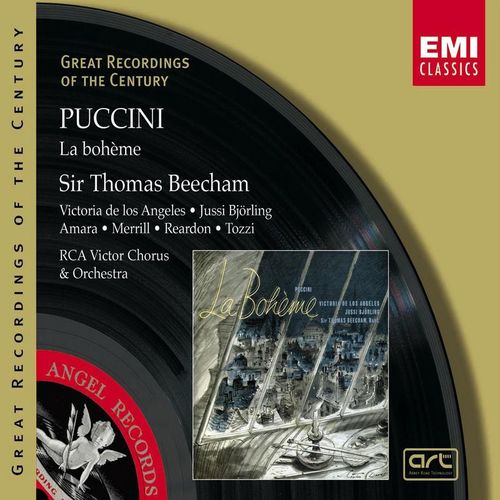
Beecham conducts Puccini’s La Bohème

Artist(s): Beecham, Thomas
De los Angeles, Victoria
Björling, Jussi

Composer(s): Puccini, Giacomo

Series: EMI Great Recordings of the Century

My Opinion

As indicated in the recording’s booklet notes, this work, a true miracle of music making, happened by pure chance and could easily never have materialized. For that miracle, we are thankful to Andrew Schulhof, who seized the opportunity of the simultaneous presence in New York in spring 1956, of the Maestro and the duo of incomparable artists that is the Spanish soprano Dame Victoria de los Angeles and the Swedish tenor Jussi Björling.

Victoria de los Angeles is an extremely charming Mimì, unquestionably the finest of her generation. And this is certainly not due to a lack of competition in the 1950s and 1960, the true golden age of opera singing. De los Angeles has that serene security in her voice, as well as the natural charm required by the role of Mimì. The other main character, Rodolfo, is camped by the imposing figure of Jussi Björling. The star tenor wonderfully succeeds in putting his stronger-than-life, characteristic voice to the service of the work. These two great artists are ably matched by Sir Thomas Beecham, one of the prominent Puccini conductors of the 20th century, and an inspired RCA Victor Chorus and Orchestra.

I am doing you a favor here by giving you a shortcut to what is generally considered to be the greatest recording of La Bohème, and thus saving you the trouble of wasting your precious listening time on lesser interpretations. You are welcome!

Reviews

“Beecham was a Puccini expert, no doubt about that, with over three hundred performances in theatres to his name. Composer and conductor knew one another though the relationship was far from good, with Puccini referring to him as ‘The Purge’, a thinly veiled observation of Beecham as inheritor of the Pill empire from his father Joseph. Just look at the cast list which even includes the young Corena in the minor doubling roles of the landlord Benoit and Musetta’s unfortunate cuckold Alcindoro. This fabulous recording came as a result of a sudden realisation by Beecham’s US manager that Jussi Björling, Victoria de los Angeles and Beecham would be in New York at one and the same time, in the spring of 1956. The result is an electrifying performance, recorded in eight days, the orchestral playing quite stunning and the singing thrilling. Both of the principal soloists were among the finest exponents in their day of the roles of Rodolfo and Mimi respectively, while the supporting ensemble has no weak links at all. There were formidable rival recordings which preceded it in the preceding post-war decade, such as Tebaldi’s fine Mimi partnered by Hilde Gueden as Musetta, Licia Albanese’s collaboration in concert in 1946 with Toscanini (whose vocal involvement proved irritatingly audible, but he did bring an authority to it for he conducted the premiere in February 1896), then there was one with Tagliavini, Taddei and Siepi and another with Tucker and Baccaloni, but the lists are not as uniformly star-studded as Beecham’s. What came after is another matter, for many would say that Decca’s set with Tebaldi, Bergonzi, Bastianini, Siepi, Corena, D’Angelo, all under the veteran Serafin, was the finest ever.

De los Angeles’ first offstage ‘Scusi’ after her shy tap on the door will seal your enjoyment, bringing tears to the eye and a shiver to the spine. The ensuing arias by both protagonists, the one impassioned, the other enchanting, and their climactic duet are simply outstandingly beautiful, with both at the top of their form. Act two gets a blazing start from the brass, the chorus sound rather lame until the women chastise the kids. Apart from the one solo lad who gets his ears boxed, the boys have no hint of ragazzi about them and sound as if they are on their way to sing Evensong at King’s College, Cambridge rather than taunting everyone around them, but Parpignol makes the most of his offstage cries. Once they are all out of the way we can settle back to the glorious de los Angeles, who in turn inspires all the men to sing their hearts out around her café table at Momus. No offstage hysterics from Musetta at her entry but plenty when she is seated with the unfortunate Alcindoro at the neighbouring table to Marcello, and even the chorus gets galvanised into singing as if they understand what they are singing about. Here, just before her aria, Beecham indulges in a simply huge combined crescendo and rallentando (as marked in the score it must be stated) at the orchestral climax before ‘Ma il tuo cuore martella’ – brazen but effective, even more so at the aria’s ending when, among the vocal ensemble now in full cry, he finds so many orchestral strands and subtexts worth bringing out.

You can sense the change of time, season and weather in the falling snowflakes following the abrupt start to the third act, the orchestral palette is full of colour, the chinking of distant cups toasted in the inn by the chorus, beautiful woodwind and harp playing. Then Mimi, coughing now of course, enters with sympathetic violins making full use of portamento, her scene with Marcello (sublime singing from Merrill) packed with tragic ardour and lingering sadness as her fatal illness is fully revealed. Björling’s entry announcing his intention to separate from Mimi (who overhears from her hiding place) is full of tactless immaturity, knowing as he does that she is mortally ill, while Merrill builds Marcello’s fury like a pressure cooker, trapped as he is by his vow to Mimi not to reveal her presence. Musetta’s entry completes the quartet, both pairs of lovers now in a mood a far cry from the joyous conclusion to the previous act. I defy anyone not to react to De los Angeles’ sobs, nor to the ensuing parting of the ways by soprano and remorseful tenor.

Of course there’s even more emotion to come, not least the glorious duet at the start of the final act for Marcello and Rodolfo, in which both men’s voices blend exquisitely, with Beecham pacing the ebb and flow of tempi with secure authority yet immaculate flexibility, all settling to that magical chord of C major played by strings and a pair of clarinets, but the genius of Puccini is that the lower one is the bass clarinet adding a special colour. The horseplay by the four male friends which follows is exuberant yet one senses that tragedy is never far off, and sure enough the interruption in the black key of E minor with Musetta’s announcement that Mimi is with her and seriously ill produces heartbreaking cries from Rodolfo, and a moving ‘Coat’ aria from Tozzi as Colline. The deathbed scene is simple, tragic but never sentimentalised (though it is Björling, rather than de los Angeles, whose sobs and raw emotion will now gnaw at your heart). If ever you needed to know exactly when Mimi’s heart stops beating you hear it precisely here. No, this is not over the top, but a heartfelt and sincere interpretation by a conductor who, despite his spats with the composer, adored the music, and for the purposes of this recording had the perfect cast.” – Christopher Fifield, review on http://www.musicweb-international.com.

Categories
Uncategorized

Jawad’s Classical Archives – Set 01, CD 011

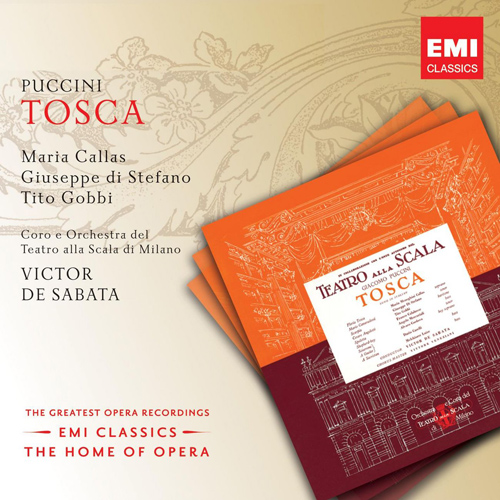
De Sabata conducts Puccini’s Tosca

Artist(s): De Sabata, Victor
Callas, Maria
Di Stefano, Giuseppe
Gobbi, Tito

Composer(s): Puccini, Giacomo

Series: EMI Great Recordings of the Century

My Opinion

Last week, one of the friends following my blog asked the question: “Jawad: how on earth someone who reviews legendary classical music recordings could possibly miss out on the great soprano Maria Callas?” In truth, this was not really a question, but rather a kind request in disguise. Before repairing this “injustice”, I would like to clarify two things that would hopefully absolve me: first of all, Dame Maria Callas (1923-1977) is not a great Soprano, she is the greatest of them all; and second, her spirit was actually present in my subconscious mind from my first post on, but like a culinary chef preparing his “plat de résistance”, I needed to serve appetizers first!

This landmark 1953 studio recording achieved classic status almost immediately after its release. The 1950s and 1960s were two miraculous decades for opera music making. And among all the artists in activity during these blessed times, legendary EMI producer Walter Legge in particular was instrumental in assembling incredible casts and orchestras for the likes of Furtwängler, Karajan, Klemperer, Giulini, Böhm and other prominent conductors of the time, who in turn created readings of Mozart, Verdi, Wagner, Puccini, and Strauss operas for the ages. The present recording is one of these glorious endeavors. Here La Divina shines of course through her vocal powers – she was then at her absolute peak, vocally speaking – but also thanks to her indelible dramatic characterization of Tosca, powerful charisma, and utterly captivating presence on stage. She is very well supported by a great cast, dominated by Tito Gobbi – probably the greatest Scarpia on record, and an astonishingly youthful and fresh Giuseppe di Stefano in the Cavaradossi role. Italian conductor Victor de Sabata, despite not enjoying the fame of a Toscanini or a Karajan, gives here a competent performance and directs a Milan La Scala Orchestra and Chorus that seemed predestined for the work. De Sabata’s relentless, almost obsessive, pursuit of perfection during the grueling recording sessions in August 1953, is abundantly documented by accounts from Gobbi and others, and could only be matched by Callas’ artistic perfection and Legge’s outstanding care and control of the technical details of the production. The mono sound of the recording, though not ideal, is pretty good for its time.

This is quite simply one of the top recordings of the 20th century, all genres considered! No true lover of classical music should miss it out, under any circumstance.

Reviews

“This set has been so unanimously regarded down the years as one of the all-time greats of the record catalogue that it is faintly embarrassing to have to write about it; surely everything that can be said has already been done so?

Well, one question that prospective buyers will wish to know is, can a transfer made, however musically and intelligently, with original LPs, match EMI’s own version(s) using the master-tapes, to which they retain their unique access? The answer is partly supplied in transfer engineer Mark Obert-Thorn’s brief note, which it is worth quoting fairly fully.

The original LPs featured pitch discrepancies between and even within sides. There were also bad edits and sudden, obtrusive volume fluctuations. On EMI’s three CD issues, some of these problems were corrected in one edition and then undone in the next, while other, new editing errors crept in …. The most recent GROC transfer compounded the problems by pitching the recording noticeably flat, an error which, in addition to adding nearly a minute and a half to the running time of this relatively brief opera, also affects the listener’s perception of tempo and vocal timbres.

For the present transfer, I assembled no fewer than ten LP copies of the set, and spent the greater part of eight weeks transferring, listening, comparing and re-doing the project until I was satisfied with the results”.

The question of pitch is obviously of considerable importance and my only query is that Obert-Thorn’s version may still be very fractionally low. I have no very sophisticated instruments to hand and base myself on the consideration that I know my domestic piano has slipped just slightly from the 440’ currently used in Italy to about 438’, and most recordings, including an Italian EMI LP pressing of extracts from this recording, sound just fractionally sharp of my piano. This recording sounds in tune with it!

However, this begs all sorts of questions. For one thing, LP turntables sometimes varied a little between each other, or even fluctuated slightly while playing. They also had a tendency to play a fraction faster when they got older, as the mechanism that clawed back the motor got old. I’m not for a moment suggesting that Obert-Thorn would use anything other than highly sophisticated and constantly checked equipment, but this might be the problem with mine, although I don’t normally notice a particular difference when I compare the same recording in LP and CD formats.

But another question is, did La Scala use 440’ back in 1953 or something slightly lower? Is c.438’ actually right? Did the EMI engineer who transferred the GROC version at a lower pitch still have historical evidence for doing so? Just to compound the mystery, the Garzanti Enciclopedia della Musica (in Italian) states that the 440’ standard was set at the Congress of London in 1939, well before this recording (but would Mussolini’s Italy of 1939 have paid heed?) while the Grove Concise Dictionary says it was decided by the International Organization for Standardisation in 1955, which would leave open the possibility that La Scala was still using something lower in 1953. I also note that the 1956 Cetra set under Basile, recorded in Turin, plays at the same pitch as Obert-Thorn’s transfer of the present set, suggesting that he is right and pitch in Italy did remain fractionally low in those years. As I happen to live in Milan I will try to make enquiries, but it’s amazing how some things can sink without trace.

Need the general listener care a hoot? Well, even the minute dichotomy between my LP and the CDs alters our perceptions; the CDs have a warmer, less strained sound, generally with a fine body to it and only minimal distortion at strenuous moments. The acoustics of La Scala were less sympathetic than those of Rome’s Santa Cecilia which Decca were using at the same period and that cannot be changed, but all things considered there seems no reason why anyone who doesn’t have this performance yet should pay more than Naxos’s rock-bottom price.

But what about the performance? It was a pace-setter in many ways. For one thing, Italian operas in those days were invariably recorded under the baton of an “Italian operatic conductor”, a soundly trained gentleman who knew the ins and outs of the repertoire, understood the human voice and was respected by singers because he “let them breathe” (which could be a synonym for “let them do what they liked”). I don’t want to knock the talents of such capable artists as Serafin, Votto, Erede, Molinari-Pradelli, Capuana, Basile, Previtali et al, or to suggest that they were all on an equal level, but it is odd that during Toscanini’s reign at La Scala HMV recorded a long series of operas there, but under Carlo Sabajno; another great conductor, Vittorio Gui, got to record a few operas thanks to his Glyndebourne associations, Antonio Guarnieri none at all. Victor De Sabata, in his only studio opera recording (a few live performances have turned up), was therefore the first Italian conductor recognised internationally as a “great conductor” to record Puccini in Italy (Toscanini’s late New York performance of “La Bohème” preceded this). After this came the Karajan/Callas “Butterfly” and the Beecham “Bohème” and the pendulum went too far the other way, leading to personalised interpretations by the likes of Sinopoli and Bernstein with the result that the work of the “Italian operatic conductor” needs reassessing for its enshrinement of a lost tradition.

De Sabata’s contribution to this “Tosca” cannot be overestimated, for the performance is totally integrated. After so many Callas sets where the diva shines, the others do what they can and the conductor follows along, here she is obviously happy to collaborate with an artist of her own stature. This is a “Tosca” of seething tension and menace (surpassed in my experience only by a short video extract under Mitropoulos) in which every note falls into place in the overall drama. Callas, who was still notable in 1953 for sheer vocal beauty as well as gut conviction, gives so much more than in, for example, the (too-) often re-released video of Act 2 from Covent Garden under the noisy, messy Carlo Felice Cillario, and Giuseppe Di Stefano, an inconsistent artist, gives of his very best as Cavaradossi. Tito Gobbi’s celebrated Scarpia is a non-pareil of slimy nastiness. Nobody else much matters in this opera, but they are all good, an unattractive shepherd apart.

In short, the mythical set lives up to its reputation and those who do not have it should set this to rights. The presentation is consistent with this series: good notes and detailed synopsis but no libretto, which you can get from Internet easily enough. Will Naxos and others please get it into their heads that “De” and “Di” in Italian names, unlike equivalent words in virtually every language, have capital letters because they are an integral part of the surname and you look up De Sabata and Di Stefano in the encyclopedia under “D” not “S”.” – Christopher Howell.

“Can Maria Callas bail out Mariah Carey? EMI apparently hopes so, as we have before us the third CD appearance of the famous soprano’s legendary Tosca, this time on the label’s Great Recordings of the Century imprint. So much ink has been spilled on this recording since its release in 1953 that little needs to be said about it here. Suffice to say that it has earned its status as the reference standard on disc, even if, as many have quibbled, you don’t get the ultimate in vocal beauty from Callas (turn to Tebaldi on Decca or Caballé on Philips for that). Nonetheless, this recording possesses the all-star cast with the ultimate Scarpia in Tito Gobbi and a sensitive Giuseppe di Stefano as Cavaradossi. Victor de Sabata, one of the better (but under-recorded) conductors of the 20th century, leads a thrilling, vital, and detailed performance.

At this point we must turn our attention to Allan Ramsay, the remastering engineer for this release and for the 1997 Callas Edition version. There is no question that this latest effort is a sonic improvement over the previous one, so if you are scratching your head at your local CD store over which one to buy (assuming, incredulously, that you do not already have this recording), don’t hesitate to grab the newer one.

Ramsay has tamed some of the stridency (compare just the opening chords), smoothed some of the more clumsy edits, and opened the soundstage significantly, an impressive achievement when you consider that this is still just a monaural (albeit fastidiously produced) recording. Skipping to the “Te Deum” section at the end of Act 1, the results of Ramsay’s work are really in evidence: Gobbi’s sinister but stentorian declamations (“Va, Tosca!”) over the organ and ever-growing orchestra and chorus are clearly delineated, vibrant, and full of presence. By contrast, in the same section of the 1997 edition the sound is flat, two-dimensional, distant, and muted.

The “new” Tosca also is a better value: you get a four-language libretto, expanded track indexing, and other goodies for Callas fans. Now all we have to do is wait for this great recording’s next revival on Mini-disc, DAT, DVD-Audio, Super Audio CD, and mp3–at which point perhaps Alain Levy, the new CEO of EMI, can crow to shareholders that the company will have recouped as much as one percent of Mariah Carey’s buyout.” – Review on ClassicsToday.
Categories
Uncategorized

Jawad’s Classical Archives – Set 01, CD 010

Richter plays Tchaikovsky and Rachmaninoff’s Piano Concertos

Artist(s): Richter, Sviatoslav

Composer(s): Rachmaninoff, Sergei
Tchaikovsky, Pyotr Ilyich

Series: DG The Originals

My Opinion

No serious classical music collection would be complete without (many) recordings of the great Soviet pianist Sviatoslav Teofilovich Richter (1915-1997). Born in Zhytomyr (Ukraine), this giant of the keyboard was blessed with extraordinary technique, as well as phenomenal sightseeing and memory. His repertoire was one of the largest of any pianist, ranging from Bach to the modern works of the 20th century.

This disk groups two landmark works of the romantic Russian piano repertoire: Tchaikovsky’s famous first piano concerto, and the no less renowned Rachmaninoff’s second piano concerto. While the Tchaikovsky is very good indeed, there are other better versions around. I personally think that this interpretation falls short of greatness due to a certain”stiffness” that could have resulted from the rather tense reunion of two legends – Karajan and Richter – with strong personalities and decidedly rigid perceptions of how a work of such stature should be shaped. The Rachmaninoff, on the other hand, is another matter altogether. Here the pianist is given the freedom of expression needed by an artist of his caliber to put his stellar powers to the best possible use. The first movement of the work is a case in point. On the surface it may have slower tempi than most other great interpretations, yet the hypnotic effect on the listener is truly breathtaking. This is the same wizardry Richter achieves in some Schumann and Schubert works, and which makes his readings of these two romantic composers so captivating and unique.

Ignore the Tchaikovsky if you want – although it is still very enjoyable – and focus on the Rachmaninoff. There is no better second piano concerto anywhere. And the sound offered by the Deutsche Grammophon engineers is thankfully first class.

Reviews

“Although the late Sviatoslav Richter spent his later years concentrating on Bach, Beethoven, and Haydn, he never completely abandoned the music of his native country. His reading of Rachmaninov’s most popular concerto, captured in fine late-’50s stereo, is one of the most glorious ever recorded. Richter’s amazing technique is completely up to the demands of Rachmaninov’s difficult writing, and he plays the heart-on-sleeve melodies with such refined intensity that they never sound sentimental. This performance is a truly amazing example of great pianism, very strongly supported by the fine orchestra and its little-known conductor. Unfortunately, the accompanying Tchaikovsky is a dud. Karajan and Richter recorded this work together as a favor to a record-company executive, but they don’t seem to be in sympathy. The conductor’s excessive refinement holds the pianist back, and the result is much too restrained for the music. Never mind. The Rachmaninov alone is easily worth the price of this disc.” – Leslie Gerber on Amazon.com.

“We’re constantly meeting Richter in the role of deeply searching musician. So how refreshing to have this reminder of his virtuosity too. [The Rachmaninov] surely qualifies as a ‘great performance on record’; the CD catalogue would have been incomplete without it.

In the Rachmaninov Richter is no slave to the metronome. His opening tempo is considerably slower than the marking in the score (particularly the eight introductory bars), which involves him in rather more than a poco piu mosso between figs. 3 and 4 to get things into their proper stride. The slow movement in its turn is slower than the prescribed marking, just as the finale is much faster. Yet everything is done with such conviction that while listening you feel there could be no other way. Helped by Wislocki each movement seems to find a natural flow and to carry you along on its own tide. Second subjects yield up all their nostalgia without obtrusive rubato. And you could hardly hope to hear the finale launched with a more abandoned yet scrupulously controlled kind of scintillating brilliance. Never, though, is it playing that draws attention to itself at the orchestra’s expense. Duetting with individual instruments is close, and no felicities of scoring go unmarked. As for the recorded tone, it has exceptional succulence for its age and comes over splendidly on CD.” – Joan Chissell, Gramophone Magazine.

“This 1995 release from Deutsche Grammophon combines two memorable concerto recordings by Sviatoslav Richter. Almost all of Richter’s recordings are considered legendary — particularly since he did not like recording in the studio — but these are rightfully so. They were some of the first that were released widely in the west, where he was still something of a new talent in the late ’50s-early ’60s, although a middle-aged man by then. The Rachmaninov Concerto No. 2 with Stanislaw Wislocki and the Warsaw Philharmonic Orchestra dates from 1959 and was met with high praise from most for its detail and the depth of Richter’s knowledgable interpretation. It is not as ardent as most other pianists’ readings, but its clarity speaks volumes and can still move the listener. The Tchaikovsky, from 1963, with Herbert von Karajan and the Vienna Symphony, is also less affecting and, in some places, less dancing than expected. It may even seem stiff to some listeners, but again, there is no arguing with the sheer intelligence of the performance. Richter and Karajan worked well together here, with a common approach to the music. The sound quality of both recordings is very good, especially with the digital re-mixing helping to enhance the fine points of the music.” – Patsy Morita.

Categories
Uncategorized

Jawad’s Classical Archives – Set 01, CD 009

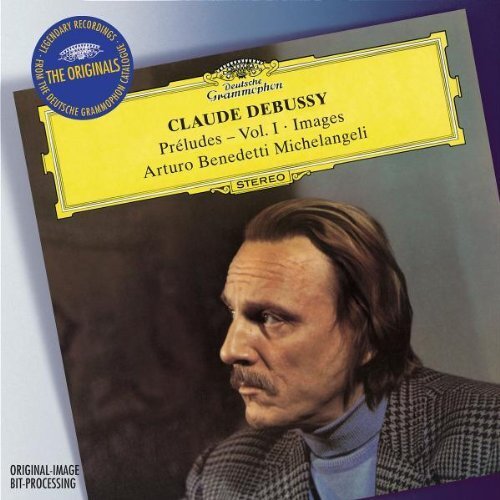
Michelangeli plays Debussy’s Preludes (Book I) and Images

Artist(s): Michelangeli, Arturo Benedetti

Composer(s): Debussy, Claude

Series: DG The Originals

My Opinion

Italian pianist Arturo Benedetti Michelangeli (1920-1995) was one of the supreme artists of the 20th century. Native of Brescia, he started playing violin then piano at the tender age of three, and graduated from Milan Conservatory at fourteen. He won the prestigious Geneva international piano competition in 1939. The latter’s jury was chaired by legendary pianist and composer Ignacy Jan Paderewski and had among its members Alfred Cortot, who famously claimed that a “new Liszt was born”. Besides, Michelangeli was an inspirational teacher, and counted among his pupils such extraordinary pianists of the second half of the 20th century as Martha Argerich, Maurizio Pollini, and Ivan Moravec. It is perhaps not a coincidence that all three are prominent specialists of the music of Chopin, and the Italian Maestro may have a hand in the matter.

Claude Debussy was, along with Chopin, among the composers Michelangeli had the most affinity with, and the present readings from the 1970s provide a most striking illustration. For me this is the best recording of “Images” available and I doubt Debussy himself had enough technique to execute his own musical ideas the way Master Michelangeli conveys them. Yes, occasionally his playing may sound overly objective, with an ice-cold precision and a lack of that warmth which arguably gives some Debussy pieces their charm; yet another voice could argue that this perceived coldness is only superficial, and deeper reflection traces it to strict adherence to the score and aversion of superfluous effect. In terms of technical command, though, there is no place for debate whatsoever, as Michelangeli’s control of the keyboard is absolute and the way he meets the demands of this music is both effortless and immaculate. Sometimes I tend to think that Michelangeli was criminally good in the way he distances himself from confirmed, able pianists of his era, let alone young pianists in the making. For the preludes, the only serious competition comes for another genial interpretation – although quite different in terms of interpretative choices – by German legend Walter Gieseking, a work I will present in the future as a landmark recording in my collection.

This is Debussy playing of the highest possible artistic order. And you don’t need lengthy scholarly reviews and opinions to get it, just trust your ears and your heart for that. Do yourself a favor and grab the disk ASAP, while it is still available. You may thank me after listening.

Reviews

“Is Michelangeli’s Debussy as good as they say? Could anything be that good? After all, Arturo Benedetti Michelangeli’s ’70s recordings of Debussy’s Images and Préludes, Book 1, were hailed in their time as revolutionary, masterly, and uniquely compelling, and the encomiums have kept on through every subsequent re-release. In this 2005 re-release on Deutsche Grammophon’s “Originals” series, the listener is asked again, is Michelangeli’s Debussy as good as they say?

Oh, yes, yes. Yes, they are. Michelangeli’s command is complete: every nuance sounds in his playing.  Michelangeli’s colors are clear and lucid, but iridescent and luminous. Michelangeli’s conception has the scope and scale of epic poetry, with each Prélude its own ode. Michelangeli’s execution is Olympian: despite the passion he brings to his playing, it is the music that resounds in the Michelangeli’s.

However, about that sound: while the sound Deutsche Grammophon gave Michelangeli in the ’70s was pristine and crystalline, and while the sound of the 1978 Préludes is remastered with such fidelity that the piano is more real than most real pianos, it still has to be said that the 1971 Images is remastered with such harshness that the piano sounds pained every time the dynamics rise above fortissimo. The only thing in this world as good as this recording of Michelangeli’s Debussy would be Michelangeli’s other recording of Debussy with a sublime Children’s Corner and a transcendent Préludes, Book 2.” – James Leonard.

“A critic once wrote of a pianist: ‘His restraint and discretion make one forget all considerations of technical dexterity. Thus the naked soul of the work is placed before the audience; its action is direct; the interpreter is lost sight of.’ The pianist was Debussy; but how easily could the same be said of Michelangeli. Only in a slightly mannered rendering of ‘La fille aux chevaux de lin’ is one aware of being subjected to an interpretation: all else is a deceptive effortlessness and the spectacle of a gift dedicated not to exposing itself but to the service of the music.” – BBC Music Magazine.

Design a site like this with WordPress.com
Get started